
Poland’s regulated gambling market has expanded significantly over the past decade, reflecting broader changes in digital entertainment consumption across Europe. Data from Statista and reports from the European Gaming and Betting Association (EGBA) show that online gambling participation continues to grow as consumers increasingly use mobile devices and digital platforms for leisure activities.
Many modern gambling platforms, including 22Bet Polska, offer both online casino games and sports wagering within a single digital environment. This combination reflects broader industry trends, where operators seek to serve users with different entertainment preferences. While both categories fall under the wider gambling sector, they often appeal to distinct motivations, risk perceptions, and engagement patterns. Examining these differences provides useful insight into how gambling participation continues to evolve among Polish players.
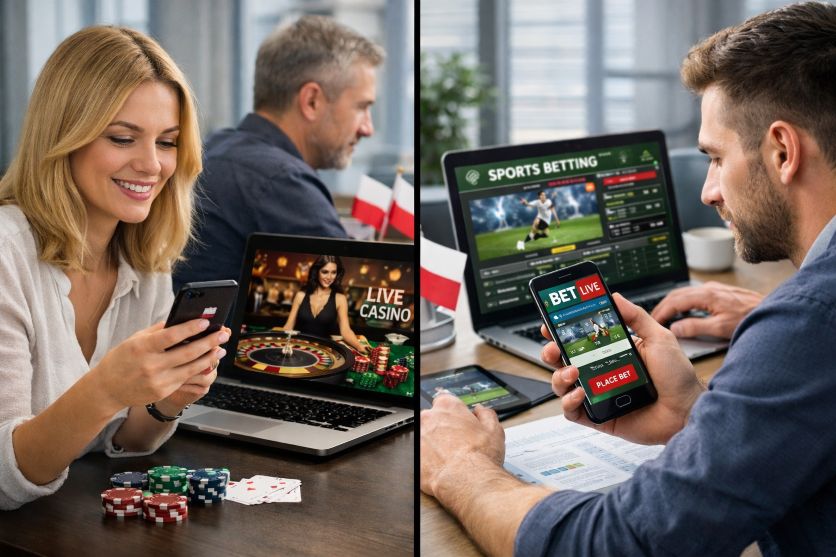
Two Distinct Forms of Digital Entertainment
Online casino gaming and sports betting share common technological infrastructure, yet they offer fundamentally different experiences. Casino games typically revolve around chance-based entertainment presented through digital versions of slots, table games, and live dealer products. Sports betting, by contrast, centers on sporting events and allows participants to engage with competitions they already follow as fans.
This distinction creates two separate forms of entertainment consumption. Casino players often seek continuous gameplay, immediate results, and a wide selection of gaming options. Sports bettors generally engage around specific events, seasons, or competitions, making participation more closely tied to sports schedules.
According to research published by the European Commission on consumer gambling behavior, motivations vary significantly across gambling products. Entertainment, excitement, social interaction, and interest in sporting events are frequently cited factors influencing participation patterns.
The Case for Online Casino Gaming
Supporters of casino-style gaming often highlight its accessibility and variety. Online casino platforms provide numerous game categories that can be accessed at almost any time, allowing users to engage without waiting for scheduled sporting events.
From an entertainment perspective, casino products offer immediate interaction. Players can choose from traditional table games, digital slot titles, live dealer experiences, and other formats designed to create diverse user experiences.
Many platforms also invest heavily in technology, graphics, and mobile optimization. Research from Deloitte has shown that digital consumers increasingly value convenience, user experience, and seamless platform functionality across entertainment sectors. These expectations extend to gambling services as well.
Critics, however, point out that the continuous availability of casino products may encourage longer engagement sessions compared with event-driven activities. As a result, responsible gaming measures such as deposit controls, spending limits, and self-exclusion tools play an important role in maintaining safer gambling environments.
The Case for Sports Betting
Sports betting attracts a different audience profile. Participation is often linked to existing interest in football, basketball, tennis, motorsport, and other competitive events. Rather than focusing solely on gameplay, users may follow teams, leagues, and tournaments throughout the year.
Research from Nielsen Sports has consistently demonstrated the strong emotional connection many fans maintain with sports content. This relationship helps explain why sports wagering remains a significant segment of the online gambling industry.
Many participants view sports betting as an extension of sports fandom. The activity often revolves around scheduled matches and events, creating natural pauses between betting opportunities. Compared with casino gaming, participation patterns may be less continuous because engagement is tied to the sporting calendar.
At the same time, sports betting can involve complex information, statistics, and media coverage that shape public perceptions of risk and decision-making. The growing availability of sports data has also changed how audiences engage with sporting events and related wagering activities. Discussions about how sports result analysis influences modern sports betting highlight the increasing role that performance metrics, historical trends, and event analysis play in shaping conversations around the sports betting experience. These factors contribute to a different user experience than traditional casino gaming.
Demographic Trends Among Polish Players
While gambling participation varies considerably among individuals, industry studies indicate that demographic patterns often differ between casino gaming and sports wagering audiences.
Reports from H2 Gambling Capital and the European Gaming and Betting Association suggest that sports betting participation tends to be more closely associated with sports fans and individuals who regularly consume sports media. Casino gaming audiences, meanwhile, frequently span a broader range of entertainment-focused users.
Age, income levels, digital literacy, and media consumption habits can all influence product preferences. Mobile technology has further blurred traditional distinctions by making both casino games and sports wagering accessible through the same applications.
As a result, many modern gambling platforms increasingly serve mixed audiences rather than maintaining strictly separate user groups.
How Risk Perceptions Differ
One of the most interesting differences between casino gaming and sports betting involves how users perceive risk.
Some sports bettors may feel a greater sense of familiarity because their participation is connected to sports they follow regularly. Knowledge of teams, athletes, and competitions can influence perceptions of involvement, even though uncertainty remains an inherent feature of sporting outcomes.
Casino games, by contrast, are generally understood as entertainment products based on predefined game mechanics and random outcomes. Because the gameplay itself is the primary attraction, users often approach the experience differently.
Research from the University of Nevada, Las Vegas International Gaming Institute has highlighted how perceptions of control and familiarity can vary substantially across gambling products. These psychological differences help explain why players may gravitate toward one category over another.
How Operators Balance Both Categories
Most major gambling operators no longer view casino gaming and sports betting as competing products. Instead, they increasingly position them as complementary offerings within a broader digital entertainment ecosystem.
Many platforms integrate casino products, sportsbook services, live streaming, mobile applications, and customer account systems into a single environment. This approach reflects broader digital business trends identified by PwC, which has reported that consumers increasingly prefer unified platforms capable of serving multiple entertainment needs.
For operators, balancing both categories involves addressing different user expectations. Sports fans may prioritize event coverage and real-time information, while casino users may focus more heavily on game variety and platform functionality. Successful platforms attempt to accommodate both preferences without emphasizing one segment at the expense of the other.
The broader Polish online gambling market demonstrates how these categories continue to coexist and evolve together. Whether users prefer casino entertainment, sports wagering, or a combination of both, digital platforms increasingly provide access to multiple forms of engagement within the same ecosystem.
Conclusion
Comparing casino gaming and sports betting participation among Polish players reveals meaningful differences in motivation, entertainment preferences, and risk perceptions. Casino games often appeal to users seeking continuous digital entertainment, while sports wagering frequently attracts individuals whose participation is connected to sporting interests and event-based engagement.
At the same time, the distinction between these categories continues to narrow as modern operators integrate multiple services into unified platforms. Discussions surrounding online gambling in Poland increasingly focus on consumer behavior, technology adoption, and responsible participation rather than viewing casino gaming and sports betting as entirely separate markets.
Responsible Gambling Warning: Gambling involves financial risk and may not be suitable for everyone. Participation should always remain a form of entertainment. Individuals should set spending limits, monitor their gambling activity carefully, and seek professional support if gambling begins to negatively affect personal, financial, or social well-being.
As the market continues to develop, both casino gaming and sports wagering are likely to remain important components of Poland’s digital entertainment landscape, reflecting the diverse preferences found across the country’s online gambling community.
Related terms such as sportsbook platforms and online casino services will continue to shape discussions about consumer behavior, market regulation, and responsible gaming practices in the years ahead.